Search

Alabaster Workshop

Makra / Alabaster Workshop
Makra Alabaster Workshop

Makra, Trusted Egyptian Alabaster Supplier

Makra an Egyptian alabaster supplier, but not in the “we found a factory and slapped a label on it” sense. Every piece starts as raw stone in Upper Egypt and ends up finished by hand in a workshop we know personally, by people we actually work with. If you’ve ever wondered what really goes into an alabaster candle holder before it lands on your table, this is that story.

The Stone

Alabaster has a quiet kind of beauty. Hold a piece up to the light and it doesn’t just reflect it — it seems to hold it, glowing softly from within. That translucence, paired with warm, honeyed tones, is why people have been drawn to this stone for thousands of years.

It’s also a soft stone, which is exactly what makes it possible to carve by hand into such fine detail. But don’t mistake soft for fragile — a well-made alabaster piece will outlast most things in your home. And because every block comes with its own veining and coloring, no two pieces we make are ever quite the same. You’re not buying a product off a production line. You’re buying a piece of stone that was already unique before anyone touched it.

Where the Name Comes From

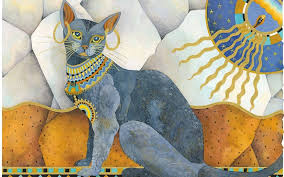
Here’s something most people don’t know: the word “alabaster” likely traces back to the ancient Egyptian a-labaste — a word for vessels connected to Bastet, the goddess of protection, home, and fertility, usually pictured as a cat or a woman with a cat’s head. In the old stories, she was Ra’s daughter, sent out to fight off his enemy Apep.

Alabaster vessels bearing her name turned up everywhere in ancient Egyptian life — in homes, in temples, and in tombs. The Egyptians even believed that the soft glow these vessels cast would help guide a soul into the next life. It’s a nice thought, honestly — that the same warm light we still love today once meant something so much bigger.

 

Where Ours Actually Comes From

To keep our position as trusted Egyptian Alabaster Supplier, we source our alabaster from quarries deep in the mountains of Upper Egypt. It’s not a shortcut kind of material — getting it right means going to where the stone actually is, not buying it secondhand from a middleman a few steps removed from the source. That’s really the difference between being an Egyptian alabaster supplier and just being another name reselling someone else’s stone.

The Workshop

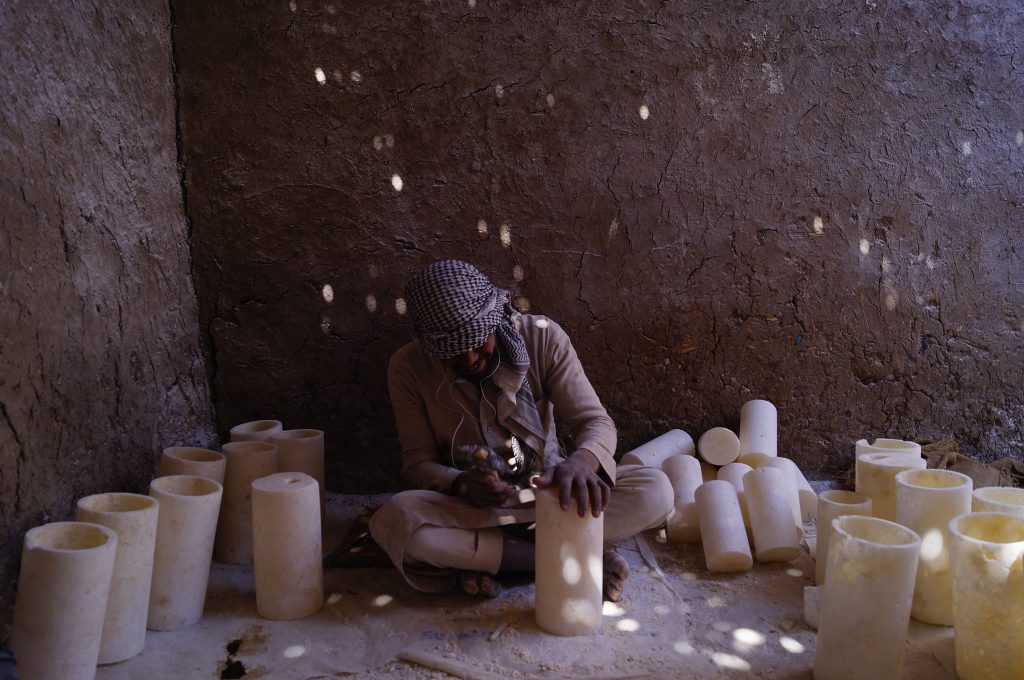
Our workshop sits in the alabaster-carving cluster on the West Bank of Luxor, a part of the world that’s been shaping this stone for generations. Nobody learns this craft from a manual. You learn it by standing next to someone who already knows what they’re doing, for years, until your hands know it too.

How a Piece Comes Together

Every piece we make passes through several hands before it’s finished, and each one has a specific job.

Someone cuts the raw stone down to size. Someone else shapes it into rough form. A third person carves in the finer details. If anything delicate breaks loose along the way, it gets carefully rebuilt rather than thrown out. And finally, our most experienced artisans do the last polish — the part that turns a carved stone into a finished piece.

It’s slower than a factory line, obviously. But that’s sort of the point.

Makra

Why It’s Actually a Healthy Choice

This part surprises people: alabaster isn’t just pretty, it’s genuinely good for your space. It’s non-toxic and lead-free, so it’s not quietly off-gassing anything into your home. It’s naturally resistant to bacteria and fungus, which matters more than you’d think in humid spaces like bathrooms or spas. And when a piece finally does reach the end of its life — which takes a very long time — it can be recycled or composted instead of sitting in a landfill.

How We Try to Do This Right

Since we started production, we meant to keep our position as premium Egyptian Alabaster Supplier. Hence we care about how this stone gets to us, not just that it does. We work with quarries that share our standards, and we pay our artisans fairly for work that takes real skill to do well. We also partner with small, independent workshops across Egypt — because keeping this craft alive means keeping the people who practice it in business too.

Why Trade Buyers Keep Coming Back to Us

If you’re sourcing for a hotel, a spa, a concept store, or a design project, this story isn’t just nice to know — it’s actually useful.

It means you can tell your own clients exactly where a piece came from, down to the region and the workshop, instead of shrugging and saying “overseas somewhere.” It means the natural variation in tone and veining — something a mass-produced alternative can’t fake — becomes a feature you can point to, not a flaw to explain. It’s a big part of why hotels, spas, and design studios keep treating us as their Egyptian alabaster supplier of choice rather than just another line item on a purchase order. And every order you place is quietly keeping a centuries-old craft, and the people who practice it, in work.

Contact your prefered Egyptian Alabaster Supplier and ask for your Trade Catalog

Where Ours Actually Comes From

To keep our position as trusted Egyptian Alabaster Supplier, we source our alabaster from quarries deep in the mountains of Upper Egypt. It’s not a shortcut kind of material — getting it right means going to where the stone actually is, not buying it secondhand from a middleman a few steps removed from the source. That’s really the difference between being an Egyptian alabaster supplier and just being another name reselling someone else’s stone.

The Workshop

Our workshop sits in the alabaster-carving cluster on the West Bank of Luxor, a part of the world that’s been shaping this stone for generations. Nobody learns this craft from a manual. You learn it by standing next to someone who already knows what they’re doing, for years, until your hands know it too.

How a Piece Comes Together

Every piece we make passes through several hands before it’s finished, and each one has a specific job.

Someone cuts the raw stone down to size. Someone else shapes it into rough form. A third person carves in the finer details. If anything delicate breaks loose along the way, it gets carefully rebuilt rather than thrown out. And finally, our most experienced artisans do the last polish — the part that turns a carved stone into a finished piece.

It’s slower than a factory line, obviously. But that’s sort of the point.

Makra

Why It’s Actually a Healthy Choice

This part surprises people: alabaster isn’t just pretty, it’s genuinely good for your space. It’s non-toxic and lead-free, so it’s not quietly off-gassing anything into your home. It’s naturally resistant to bacteria and fungus, which matters more than you’d think in humid spaces like bathrooms or spas. And when a piece finally does reach the end of its life — which takes a very long time — it can be recycled or composted instead of sitting in a landfill.

How We Try to Do This Right

Since we started production, we meant to keep our position as premium Egyptian Alabaster Supplier. Hence we care about how this stone gets to us, not just that it does. We work with quarries that share our standards, and we pay our artisans fairly for work that takes real skill to do well. We also partner with small, independent workshops across Egypt — because keeping this craft alive means keeping the people who practice it in business too.

Why Trade Buyers Keep Coming Back to Us

If you’re sourcing for a hotel, a spa, a concept store, or a design project, this story isn’t just nice to know — it’s actually useful.

It means you can tell your own clients exactly where a piece came from, down to the region and the workshop, instead of shrugging and saying “overseas somewhere.” It means the natural variation in tone and veining — something a mass-produced alternative can’t fake — becomes a feature you can point to, not a flaw to explain. It’s a big part of why hotels, spas, and design studios keep treating us as their Egyptian alabaster supplier of choice rather than just another line item on a purchase order. And every order you place is quietly keeping a centuries-old craft, and the people who practice it, in work.

Contact your prefered Egyptian Alabaster Supplier and ask for your Trade Catalog

[/vc_column_text][/vc_column][/vc_row]


Where Ours Actually Comes From

To keep our position as trusted Egyptian Alabaster Supplier, we source our alabaster from quarries deep in the mountains of Upper Egypt. It’s not a shortcut kind of material — getting it right means going to where the stone actually is, not buying it secondhand from a middleman a few steps removed from the source. That’s really the difference between being an Egyptian alabaster supplier and just being another name reselling someone else’s stone.

The Workshop

Our workshop sits in the alabaster-carving cluster on the West Bank of Luxor, a part of the world that’s been shaping this stone for generations. Nobody learns this craft from a manual. You learn it by standing next to someone who already knows what they’re doing, for years, until your hands know it too.

How a Piece Comes Together

Every piece we make passes through several hands before it’s finished, and each one has a specific job.

Someone cuts the raw stone down to size. Someone else shapes it into rough form. A third person carves in the finer details. If anything delicate breaks loose along the way, it gets carefully rebuilt rather than thrown out. And finally, our most experienced artisans do the last polish — the part that turns a carved stone into a finished piece.

It’s slower than a factory line, obviously. But that’s sort of the point.

Makra

Why It’s Actually a Healthy Choice

This part surprises people: alabaster isn’t just pretty, it’s genuinely good for your space. It’s non-toxic and lead-free, so it’s not quietly off-gassing anything into your home. It’s naturally resistant to bacteria and fungus, which matters more than you’d think in humid spaces like bathrooms or spas. And when a piece finally does reach the end of its life — which takes a very long time — it can be recycled or composted instead of sitting in a landfill.

How We Try to Do This Right

Since we started production, we meant to keep our position as premium Egyptian Alabaster Supplier. Hence we care about how this stone gets to us, not just that it does. We work with quarries that share our standards, and we pay our artisans fairly for work that takes real skill to do well. We also partner with small, independent workshops across Egypt — because keeping this craft alive means keeping the people who practice it in business too.

Why Trade Buyers Keep Coming Back to Us

If you’re sourcing for a hotel, a spa, a concept store, or a design project, this story isn’t just nice to know — it’s actually useful.

It means you can tell your own clients exactly where a piece came from, down to the region and the workshop, instead of shrugging and saying “overseas somewhere.” It means the natural variation in tone and veining — something a mass-produced alternative can’t fake — becomes a feature you can point to, not a flaw to explain. It’s a big part of why hotels, spas, and design studios keep treating us as their Egyptian alabaster supplier of choice rather than just another line item on a purchase order. And every order you place is quietly keeping a centuries-old craft, and the people who practice it, in work.

Contact your prefered Egyptian Alabaster Supplier and ask for your Trade Catalog

[/vc_column_text][/vc_column][/vc_row]

Request Wholesale Quote